
White-Label Digital Marketing for Media Companies: Scaling Paid Media, SEO, and AI-Driven Growth

If you are still selling impressions, you are competing on price. If you are selling results, you are competing on quality.
That shift is already happening. eMarketer says more than 70% of U.S. digital ad spending is now performance-based, and that share continues to rise. For companies in the broadcast and media network business, this is not just a trend. It is a major transformation in how revenue is created, measured, and scaled.
Advertisers expect more today. They want a full-funnel strategy, cross-channel execution, and clear attribution tied to business outcomes, not just reach and frequency. At the same time, people are discovering businesses in more ways than ever through traditional search engines, social media, and AI-powered tools such as ChatGPT and Google’s AI Overviews.
That has created a wider gap between what advertisers need and what traditional media models were built to deliver.
White-label partnerships are becoming one of the most effective ways to close that gap. They allow media companies to become performance-driven growth partners without having to build every capability in-house.
Why the Shift to White-Label Partnerships Is Accelerating

Both customer demand and platform evolution are accelerating the move toward performance marketing. Advertisers are shifting budgets to channels that offer measurable return on investment, while the platforms themselves are becoming more complex and specialized.
Today, media companies have to manage:
- Growing demand for ROI-driven advertising, including leads, revenue, and store visits
- Rapid expansion of paid media channels beyond Google and Meta
- The rise of AI-driven discovery through AEO and GEO, which is reshaping visibility
You can build internal teams to support all of this, but doing so is often slow, expensive, and difficult to scale across multiple markets. White-label partnerships offer a faster and more flexible path forward. They help companies expand capabilities while keeping internal teams focused on sales and client relationships.
At this stage, partner quality matters a great deal. For example, white-label partners working with AdMax Local gain support from a Google Premier Partner and Meta Business Partner, providing strong platform expertise and performance knowledge. They also work with a partner that holds SOC 2 Type 1 certification, helping media companies maintain enterprise-grade security and compliance. Both are becoming increasingly important for organizations managing advertiser relationships across multiple markets.
From One Channel to a Full-Funnel Paid Media Strategy
Paid media remains central to performance marketing, but the landscape has changed significantly. A single-channel approach is no longer enough to meet demand or maximize budget efficiency.
Today’s high-performing channel mix typically includes:
- Google Ads (Search, Performance Max, YouTube) to capture high-intent demand and drive bottom-funnel conversions
- Meta (Facebook and Instagram) Ads to scale prospecting and retargeting with advanced audience modeling
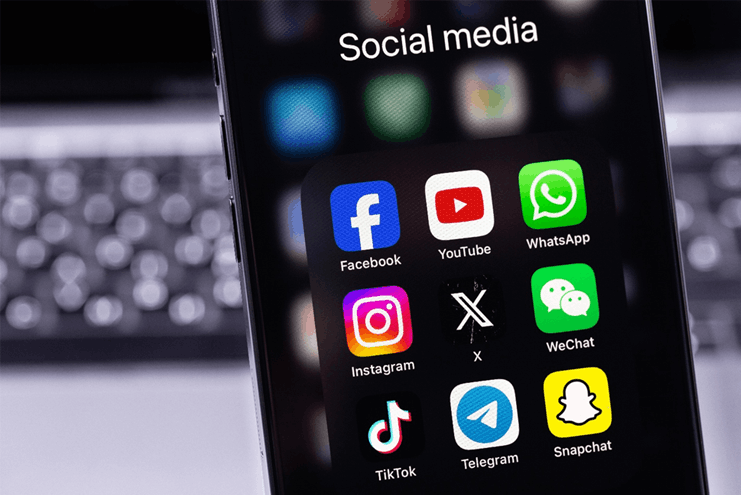
- TikTok and Snapchat Ads to deliver incremental reach and engagement, especially among younger audiences
- LinkedIn Ads to support precise B2B targeting for higher-consideration services
- Reddit Ads to unlock intent-driven engagement within highly active communities
But platform access is only half of the equation. Execution quality is what drives results. Leading white-label partners ensure account managers are certified across platforms, including Google Ads, Meta, LinkedIn, and TikTok. That helps campaigns launch faster and stay aligned with each platform’s best practices.
Just as important, these campaigns are not managed in silos. Budget allocation, creative strategy, and performance optimization are coordinated across channels to maximize total return, not just platform-specific metrics.
Beyond Paid Media: Winning Visibility in SEO, AEO, and AI-Driven Search

Paid media can drive immediate results, but long-term growth depends on visibility across both organic and AI-driven channels. This is an area where many media companies are still underdeveloped, and it is also where substantial opportunity exists.
A modern strategy must include:
SEO (Search Engine Optimization)
- Owning high-intent queries across local and national search
- Optimizing multi-location and franchise visibility
- Aligning content with conversion-focused intent
AEO (Answer Engine Optimization)
- Structuring content to appear in featured snippets and AI summaries
- Using schema and technical enhancements to improve extractability
- Providing clear, authoritative answers to common questions
GEO (Generative Engine Optimization)
- Ensuring brands are cited in AI-generated responses from platforms such as ChatGPT, Gemini, and Perplexity
- Building content ecosystems that AI models trust and reference
- Positioning clients early in emerging discovery channels
As discovery continues to evolve, media companies need to ensure their clients are easy to find not only in traditional search results but also in AI-generated answers, which are becoming more influential in decision-making.
Turning Capabilities into Results Through Integration

The value of a white-label partnership does not come from the services alone. It comes from how effectively those services integrate into the business.
Many media organizations struggle because they layer digital services onto legacy models without making sure everything works together. The result is often fragmented execution, inconsistent reporting, and missed revenue opportunities.
Successful integration requires alignment across four key areas:
Sales Enablement
- Clear packaging and pricing models
- Vertical-specific messaging for industries such as home services, education, furniture, financial services, fitness, and automotive
- ROI-focused narratives that resonate with advertisers
Unified Reporting and Attribution
- Consolidated performance reporting across all platforms
- Integration with GA4 and third-party analytics tools
- Translation of metrics into business outcomes
Operational Workflow Alignment
- Defined SLAs for builds, optimizations, and reporting
- Streamlined communication through ticketing systems
- Consistent QA processes across accounts
Strategic Oversight
- Proactive recommendations and budget reallocations
- Quarterly business reviews (QBRs)
- Ongoing insight into platform and market changes
Advanced partners also invest in tools they use within their own businesses. For example, partners working with AdMax Local can access proprietary management portals that use AI-driven insights to give both internal teams and clients real-time visibility into performance, pacing, and optimization opportunities. This level of transparency and intelligence helps close the gap between strategy and execution, making performance more actionable.
The Financial Case for White-Label Partnerships

From a business standpoint, white-label partnerships provide a strong path for media companies to expand their digital capabilities.
Instead of investing heavily in:
- Hiring and training platform specialists
- Building internal reporting and optimization tools
- Keeping up with constant platform changes
Companies can:
- Launch new revenue streams quickly
- Maintain healthy margins through efficient delivery models
- Keep internal teams focused on sales, strategy, and client relationships
In many cases, this approach allows companies to increase revenue without significantly increasing overhead, improving both profitability and operational efficiency.
From Media Sellers to Growth Engines
The strongest broadcast and media network companies are changing the way they compete. They are no longer just selling inventory. They are delivering outcomes.
White-label partnerships are a major part of that shift because they allow companies to:
- Expand into digital channels with strong growth potential
- Offer full-funnel marketing solutions
- Compete with agencies and consultancies that are digital-native
The demand for integrated, performance-driven strategies will only increase as AI changes how people discover and engage with businesses.
The media organizations that move fastest to integrate performance, AI-driven discovery, and scalable partnerships will not simply adapt to the future. They will help define it, and partners like AdMax Local are built to help lead that transformation.
Posted On : 03-19-2026
Author : Patrick Dean Hodgson
Latest Blogs
Archives
No archives